Where Technology is Concerned, Ohio’s Hospice has ‘IT’
Each day we fire up our devices and do our work. We open a Teams meeting and chat with our teammates. When we hit print, we don’t think twice about what’s going to pop out of the printer.
There’s a reason for that and on this National IT Professionals Day we recognize the critical but often unseen work of our team of professionals who manage and maintain the essential systems and applications that power our modern digital experiences.
At Ohio’s Hospice we are especially grateful for our teammates on the support and infrastructure sides of IT. Not only do our jobs depend on smooth-running systems, so does our patient care.
And because we have Inpatient Care Units (IPUs) and offices spread throughout our three care regions across the state, it’s essential to have a great IT crew.
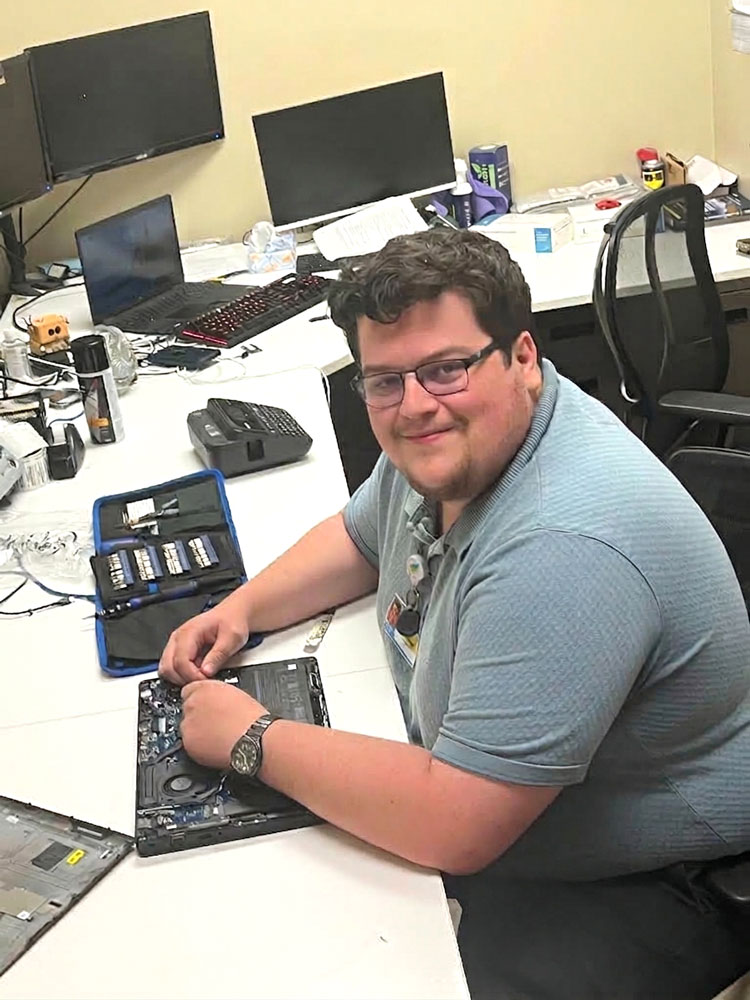
“The remote troubleshooting skills have to be pretty good,” said Zachary Cordle, the only IT support specialist for our Central Care Region. “Because I, you know, I can’t be everywhere at once. Most software stuff I can fix remotely.”
But when it’s a hardware failure it becomes a boots-on-the-ground situation.
“I’m not glued to my office,” said Justin Minnis, IT support specialist for the North Care Region. “I can always travel if the need is there. I’ve done it either way. I can provide some support if there’s a real emergency. I can get on site.”
That situation, however, would likely require the administrative team, which is the third level of IT.
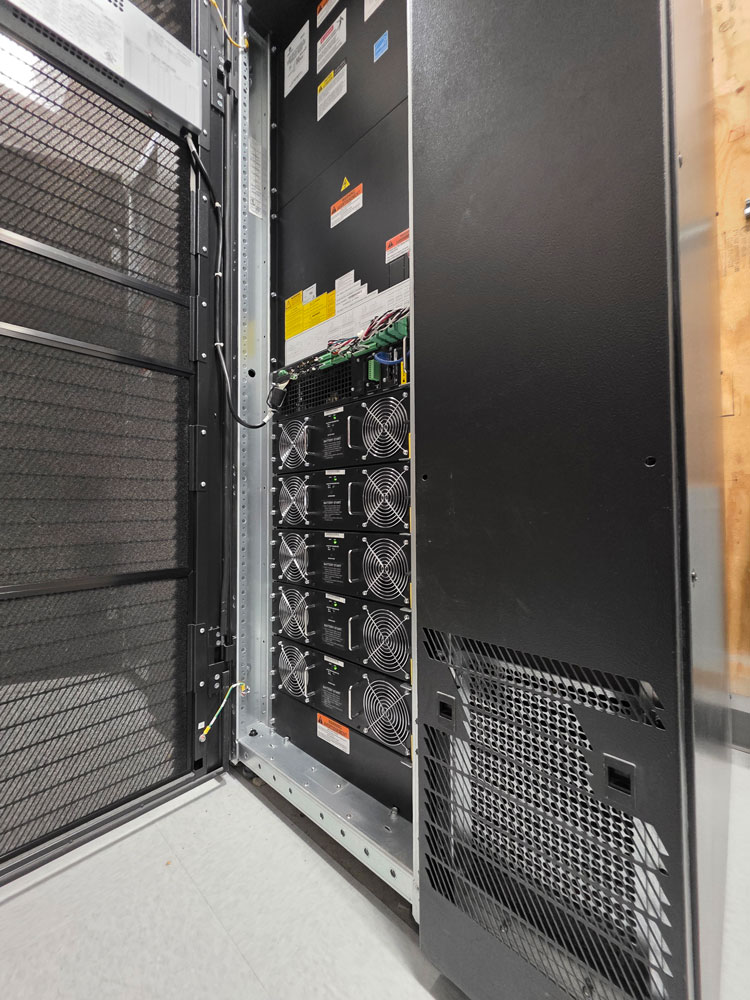
“We’re kind of the connective tissue,” said Chris Zappanti, director of implementation and infrastructure. “Our job is to maintain connectivity between buildings, between services, keep servers up and running. Connect all of those facilities back to our headquarters so everybody can get to what they need to get.”
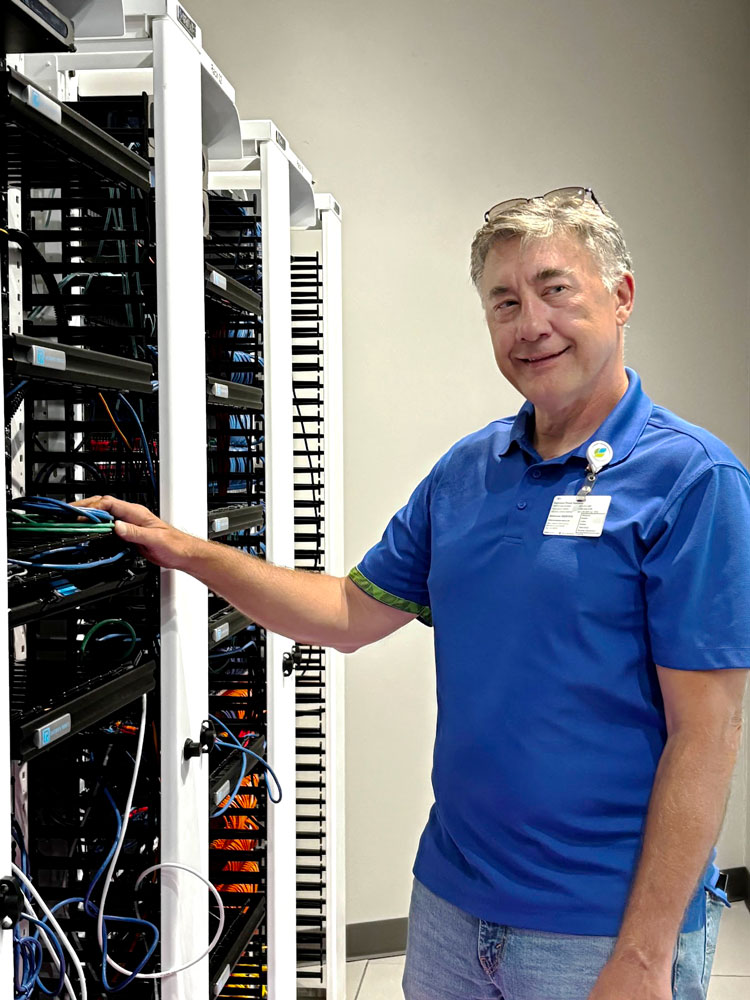
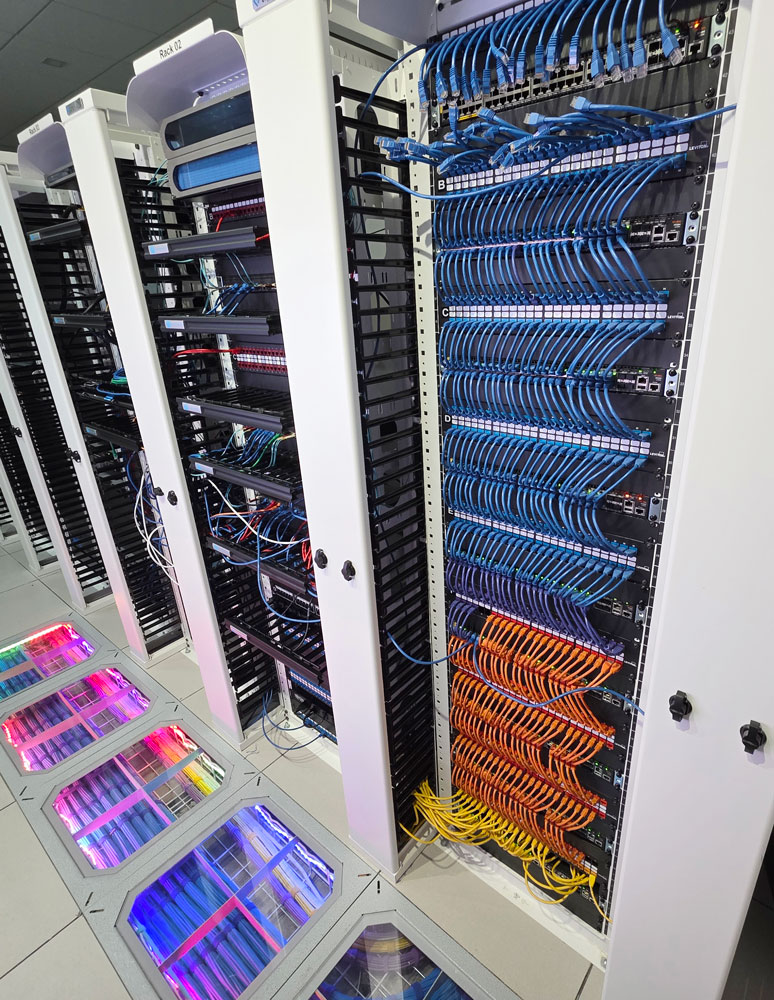
Keeping those systems running is vital to providing superior care and superior services to our patients wherever they call home. IT has that taken care of in the case of an outage.
Our clinical team carries iPads and phones with hotspots so they can access patient records in the field. In our IPUs, safeguards are in place in the event they go offline.
“We’ve built in internet redundancy,” Chris said. “So if our primary connection drops, we have a failover. That’s new in the last year. So at our headquarters and IPU facilities, we have a primary interconnection, and then we have a secondary internet connection. If the primary fails, we can drop over to it.”
There are also generators that will run at the IPUs in the event of a loss of power. That will allow our care teams to continue to access patient records and assure patients and families that their care will not be interrupted.
If one of the safety measures fails kick in, the IT team will be ready to jump in and attack the issue. But they aren’t just sitting around and wait for a ticket to come from the help desk, which is the first step in getting support.
“We’re always involved in something,” said Heather Starbuck, an IT support specialist in the South Care Region. “We’re always doing something. We’re in a transition period, where our equipment has become outdated. And we’re swapping. It’s going to be kind of intense for the next year of swaps.”
But the support specialists and members of the admin team are always ready to keep Ohio’s Hospice online and running.