Tips for Caregivers: Simple Tips to Protect Your Skin
As the weather heats up and we spend more time outside with friends and family, it’s important to remember to take care of our skin as our exposure to the sun increases.
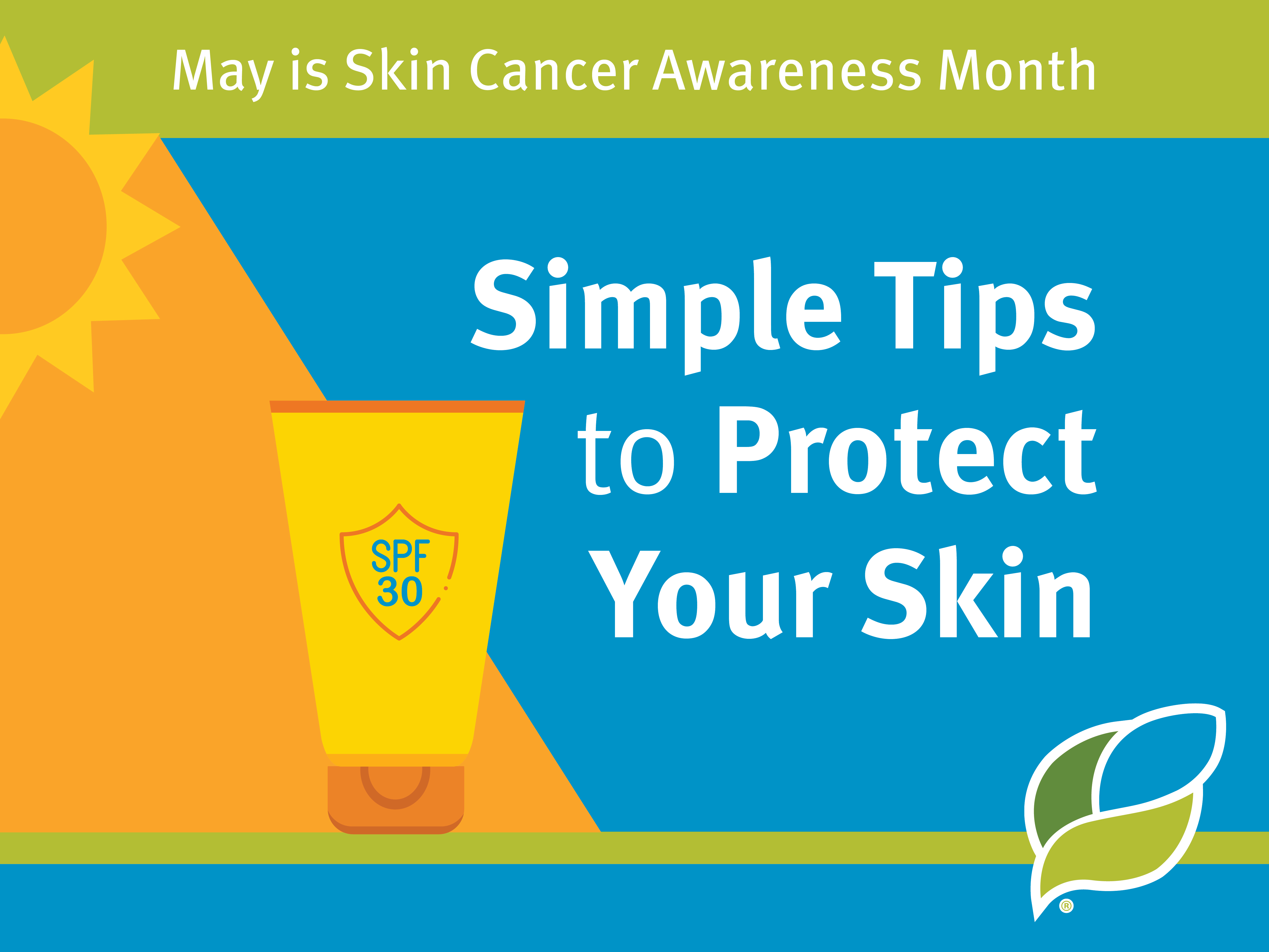
During Skin Cancer Awareness month, we remind you that too much exposure to the sun can increase the risk of skin damage, including the development of skin cancer, the most common type of cancer in the United States.
Ultraviolet (UV) light may be harmful for your skin and lead to some skin cancers. They can take many forms, but the three most common are basal cell carcinoma, squamous cell carcinoma and melanoma.
Nearly 100,000 Americans are diagnosed with melanoma each year, and more than 1.4 million people in the United States are living with it today. While melanoma is less common than other skin cancers, it’s more likely to spread, making prevention especially important.
Safety Tips
Decrease your risk for skin cancer with safe sun practices. Follow these sun safety tips for you and your family:
- Avoid direct sunlight and seek shaded areas, especially during the hours of 10 am-4 pm.
- Wear sunscreen that is SPF30 or higher and protects against UVA and UVB.
- Remember to reapply! Reapply sunscreen to your entire body every two hours after sweating or getting wet. Don’t forget lip balm with SPF.
- Cover your skin with lightweight long sleeves, pants, hats, and sunglasses.
- Shield your eyes with sunglasses. Many older adults experience vision loss as they age. During the summer months, the bright and direct sunlight and UV rays can take a further toll, causing problems from discomfort to lasting vision damage.
- Protect infants and the elderly. Babies younger than 6 months should be kept out of direct sunlight and should wear protective clothing and hats.
- Avoid indoor tanning. Using a tanning bed, booth, sunbed, or sunlamp exposes users to high levels of UV rays. Over time, too much exposure to UV rays can cause skin cancers, cataracts, and cancers of the eye.
Skin Self-Examination
Regularly check your skin for new or changing moles, spots, or lesions. Early detection of abnormalities can significantly improve treatment outcomes. Contact a healthcare professional if you notice changes in size, color, shape or texture of your skin.
Caregiver Support
If you are caring for a loved one, you don’t have to carry the load alone. Share responsibilities with friends, family, and community members — whether that’s meals, errands, or childcare. Tools like SignUpGenius can help coordinate support.
And don’t neglect yourself. Caregivers often face stress, poor sleep and health issues of their own. Take the offered breaks, keep your own doctor’s appointments, and find small ways to recharge.
Emotional strain can be heavy, but your mental health matters. Connecting with other caregivers — through groups, forums, or resources — can help you feel less alone.